Digital land registries and open property data: Estonia, Dubai Land Department, HM Land Registry, and what AI does with them
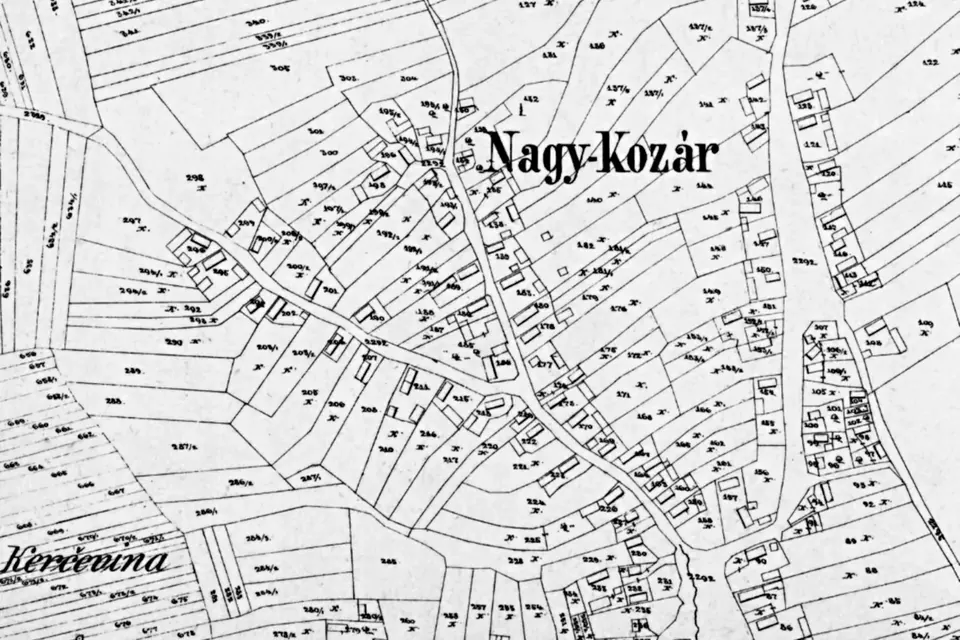
A land register is one of the oldest pieces of public infrastructure: a trusted record of who owns what, and on what terms. Digitising it changes two things. Transactions can be registered faster and more safely, and the data the register accumulates, especially prices, can be opened up for everyone, from households to banks to machine-learning models. Estonia, Dubai, and England and Wales have taken three different routes.
Three registries at a glance
| Estonia | Dubai | England and Wales | |
|---|---|---|---|
| Register | e-land register (e-kinnistusraamat), run by the Centre of Registers and Information Systems (RIK) | Dubai Land Department (DLD) registers sales, mortgages and, through Ejari, tenancy contracts | HM Land Registry |
| Open price data | Aggregated statistics from the Land and Spatial Development Board's transaction database, from 1996 | Transaction-level open data (sales, rents, valuations, units) and indices | Price Paid Data: every qualifying residential sale since 1 January 1995 |
| Granularity | Values shown only where at least five transactions took place | Individual transactions, with area, property type and size | Individual sales with full address, but no floor area |
| Terms | Free queries; cite the source | Open data portal; some services and APIs paid | Open Government Licence v3.0, with address-data conditions |
Facts as of October 2026; sources are listed at the end of the article.
Estonia: an identity-first register, cautious statistics
Estonia's land register is consulted online through the e-land register at kinnistusraamat.rik.ee, operated by RIK under the Ministry of Justice. Access requires digital identification with an ID card, Mobile-ID, Smart-ID or a recognised EU eID. The basic parts of an entry are public; the full property file is open only to those with a legitimate interest. Like the rest of Estonian e-government, the register relies on the national digital identity and on secure data exchange between registers through X-Road: notaries, banks and the cadastre exchange data rather than paper.
Prices follow a different path. Notaries must send a transaction certificate to the cadastral registrar within ten days of certifying a property transfer, electronically. The Land and Spatial Development Board (Maa- ja Ruumiamet) compiles these into a transaction database that goes back to 1996, publishes monthly and quarterly overviews by the 20th of the following month, and lets anyone run queries by area, property type and period, downloadable as spreadsheets. To protect privacy, the value of transactions is displayed only where at least five transactions took place. The board asks users to credit "Land and Spatial Development Board, transaction database" and warns that query results are not official extracts.
The result suits market statistics, but deliberately not the valuation of a single home from open data alone.
Dubai: a transaction-level market in the open
The Dubai Land Department publishes open real estate data on its website with separate sets for transactions, rents, projects, valuations, land, buildings, units, brokers and developers; earlier years are available through the emirate's open data platform run by Digital Dubai. Because Ejari, the system in which Dubai tenancy contracts are registered, sits inside the same institution, rents are recorded alongside sales, something few markets can offer.
For individuals, the DLD's Dubai REST app bundles services that elsewhere are scattered: tracking construction progress and escrow accounts of off-plan projects, an owner's portfolio, registering and renewing leases, filing rental disputes, requesting valuation certificates, checking broker and company registrations, and consulting rental, sales and service charge indices. The DLD also runs an official rental index used to calculate permitted rent increases.
Dubai has also used the register to experiment. In March 2025 the DLD announced the pilot phase of a real estate tokenisation project, developed with the Virtual Assets Regulatory Authority and the Dubai Future Foundation: fractional shares of a property are issued as tokens linked to the official title record, bought in dirhams rather than cryptocurrency, and initially open only to holders of a UAE Emirates ID. In February 2026 a second phase opened controlled resale of those tokens on a secondary market from 20 February. Separately, the DLD reported transactions worth AED 252 billion in the first quarter of 2026, 31% more than a year earlier.
Openness has limits: the DLD notes that its Residential Rental Performance Index must not be used for commercial purposes such as pricing or investment decisions, and its rental index API is a paid service reserved for registered property management companies.
England and Wales: the open licence model
HM Land Registry publishes Price Paid Data: one row for every residential sale lodged with it since January 1995, with price, date, postcode and address, property type (detached, semi-detached, terraced, flat or other), new build or not, and freehold or leasehold. It is updated on the 20th working day of each month, and released under the Open Government Licence v3.0, which allows commercial reuse with attribution. One restriction applies: the addresses are derived from Royal Mail and Ordnance Survey data, which may be used for personal and non-commercial purposes or to provide residential property price information; other uses need Royal Mail's permission.
Some transactions are excluded by design: sales not for value, right-to-buy discounts, transfers of a share, and others. Since October 2013 a second category flags repossessions, buy-to-let purchases with a mortgage, and sales to companies. Registration also lags completion by weeks, so the latest two months are always incomplete. Beyond Price Paid Data, the register sells a copy of any title for £7 online and offers datasets such as land owned by UK and overseas companies. With the Office for National Statistics and its Scottish and Northern Irish counterparts, it produces the UK House Price Index, which uses a hedonic regression model to adjust for the mix of homes sold each month.
What AI and analytics do with these data
Open price data feed three kinds of tools:
- Indices and dashboards. Median prices by area and month, the volume of sales, the share of new builds. These need only clean aggregation; a Price Paid Data download and a few lines of code are enough.
- Automated valuation models (AVMs). Statistical or machine-learning models that estimate the value of a specific home from past sales of similar ones nearby, usually adding features the registry lacks (floor area from energy certificates, number of rooms, listing text, photos). Lenders use them for remortgages and portfolio monitoring; property sites use them to show estimates.
- Market intelligence. Forecasts, risk scoring for lenders and insurers, and detection of anomalies such as sales far below the local norm that may signal fraud or money laundering.
Each registry shapes what is possible. Dubai's transaction-level data with unit sizes support price-per-square-metre models directly. England and Wales give addresses but no sizes, so models must link other datasets, with matching errors. Estonia's five-transaction threshold keeps open data at the statistical level, and serious valuation needs licensed access.
For a household, the practical result is that anyone can compare neighbourhoods, or two similar flats on the same street, against recorded sale prices on a property-search site before talking to an agent.
Limits and safeguards
- Bias in, bias out. Models trained on past prices reproduce past patterns, including those shaped by discrimination. In the United States, six federal agencies issued a rule on quality control standards for AVMs used in mortgage decisions, published on 7 August 2024 and in effect from 1 October 2025: lenders must ensure a high level of confidence in estimates, protect against data manipulation, avoid conflicts of interest, run random sample testing and comply with nondiscrimination laws.
- Lending rules. In the EU, the European Banking Authority's guidelines on loan origination and monitoring (EBA/GL/2020/06) allow statistical models for valuing property collateral, but require banks to understand their limits, check the quality of input data and validate results. The EU AI Act lists creditworthiness assessment of individuals as a high-risk use; whether a valuation model falls under it depends on the role it plays.
- Privacy. Price data attached to an address is personal data in practice. Estonia's aggregation threshold, England's address licence and Dubai's controlled APIs are three different answers to the same tension.
- Coverage gaps. No registry records every transaction: off-market deals, share transfers and late registrations are missing or delayed. An estimate is never a valuation by a qualified professional.
Good digital property infrastructure, like the identity and payment systems discussed elsewhere on Public Rails, is judged less by how much it publishes than by whether publication serves the public: who governs it, and who can check it.
Sources
- Land and Spatial Development Board (Estonia), Real estate transaction statistics.
- Centre of Registers and Information Systems (Estonia), e-land register.
- Dubai Land Department, Real estate data (open data).
- Dubai Land Department, Dubai REST and Residential Rental Performance Index.
- Dubai Land Department, pilot phase of the Real Estate Tokenisation Project (March 2025), Phase II (February 2026) and Q1 2026 transactions.
- HM Land Registry, About the Price Paid Data and Price Paid Data downloads.
- The National Archives, Open Government Licence v3.0.
- HM Land Registry, About the UK House Price Index and Use land and property data.
- Federal Register, Quality Control Standards for Automated Valuation Models (89 FR 64538, 7 August 2024).
- European Banking Authority, Guidelines on loan origination and monitoring (EBA/GL/2020/06).
- EUR-Lex, Regulation (EU) 2024/1689 (AI Act), Annex III.
 Case studies
Estonia's X-Road
The federated data exchange layer launched in 2001, how it works, how it went open source and cross-border, and what transfers elsewhere.
 Guides
Data exchange layers explained
Law-based exchange between registers, consent-based sharing and Europe's data spaces, compared side by side.
 Analysis
Who governs DPI?
Operator models, the accountability that matters, and what the UN safeguards framework and the 50-in-5 campaign add.